
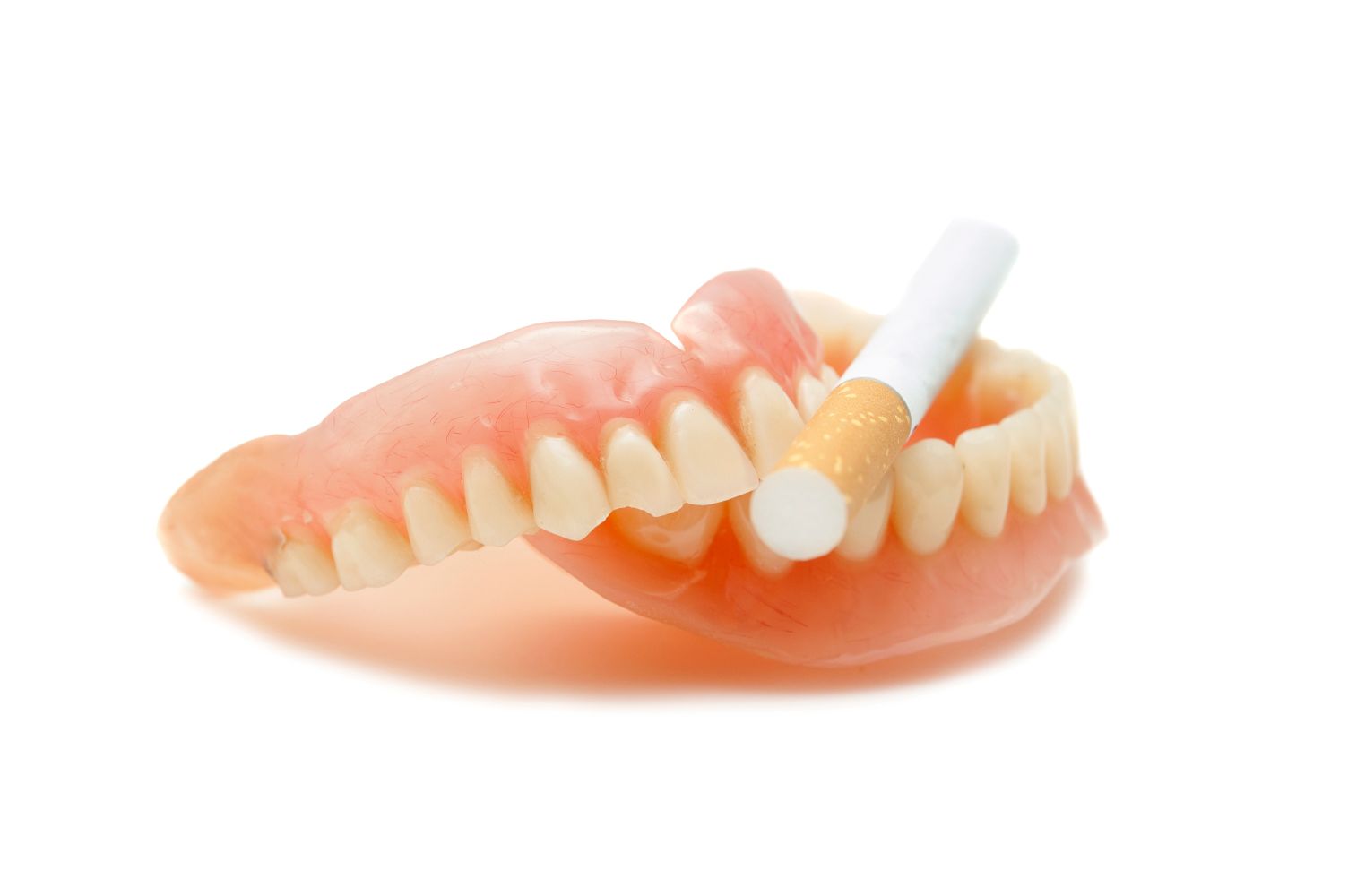
Dentures are the standard method of rebuilding arches after tooth loss, and they remain popular today because of their incredible versatility. Regardless of how many teeth went missing, your dentist can provide a lifelike set of replacements to enhance your smile’s function and appearance.
But you may need to adjust your daily habits and routines to keep your new teeth in good condition. For example, did you know that smoking can be harmful to dentures? Continue reading to learn more about why you might want to consider quitting before pursuing this treatment!
How Does Smoking Affect Dental Health?
Cigarettes, vapes, and other tobacco products generally contain nicotine, which is the addictive substance that keeps you coming back for more. Unfortunately, this chemical also functions as a vasoconstrictor, reducing your blood’s oxygen levels and flow. It also suppresses your immune system, making it that much harder for your body to deliver essential nutrients and infection-fighting cells to your mouth. This increases the likelihood of developing oral issues such as gum disease, dental decay, and other concerns.
As a result, smokers are significantly more likely to experience dental problems, and some of these can potentially affect their ability to wear dentures.
Can I Smoke with Dentures?
It’s technically possible to smoke with dentures in your mouth, but it’s not recommended. This habit can negatively affect your prosthetics in a few different ways, including:
- Contributes to stains. Chronic tobacco use is infamous for causing yellow or brown blemishes in your natural and artificial teeth that can leave your grin looking dark and dirty.
- Increases the chance of infection. Nicotine use reduces your mouth’s self-defense systems, making it easier for bacteria to cause gum disease or other infections that make it uncomfortable to wear your restoration.
- Causes swelling. If your connective tissues develop disease, they can become swollen and sore, meaning your dentures, which are designed to match your mouth’s unique dimensions, can become ill-fitting.
- Damages materials. The chemicals in cigarettes can also break down the gum-colored acrylic base and other components of your dentures, leading to a need for more frequent repairs or replacements.
How Can I Help Maintain My Dentures?
Stopping smoking can help you keep your restoration in great shape for years, but it can be difficult to quit cold turkey. You can try gradually decreasing your tobacco usage until you no longer feel so compelled to take a drag.
In the meantime, there are other ways you can help protect your prosthetics, such as:
- Implement a routine. Removing your dentures twice daily to gently brush all sides with a soft-bristle toothbrush and cleaning your gums before reinserting them helps clear away plaque and bacteria that contribute to oral issues.
- Stay hydrated. Drinking more water helps keep your oral cavity clean, and the extra moisture helps combat dry mouth caused by smoking.
- Soak them at night. Removing your restoration and leaving it in a glass of water or special soaking solution overnight kills germs and retains their shape while giving your gums a much-needed chance to rest and recover after supporting them all day.
- Schedule routine checkups. Seeing your dentist every six months for a routine checkup and cleaning allows them to catch and treat any areas of concern, like damaged dentures, before they cause serious harm.
If you’re a smoker and are unsure whether you’re a good candidate for dentures, the best next step is to schedule a consultation with your provider!
About the Practice
At Mauck & Ricci, DDS, patients of all ages benefit from two providers who are passionate about helping families build and maintain their happiest, healthiest smiles. Dr. Mauck and Dr. Ricci share decades of combined experience, and today, they collaborate to offer a complete menu of services, including dentures, to meet your unique needs under one roof. They combine art and science with advanced technology to provide comfortable, lifelike replacement teeth intended to last. You can request an appointment on the website or call the office at (303) 745-1400.