
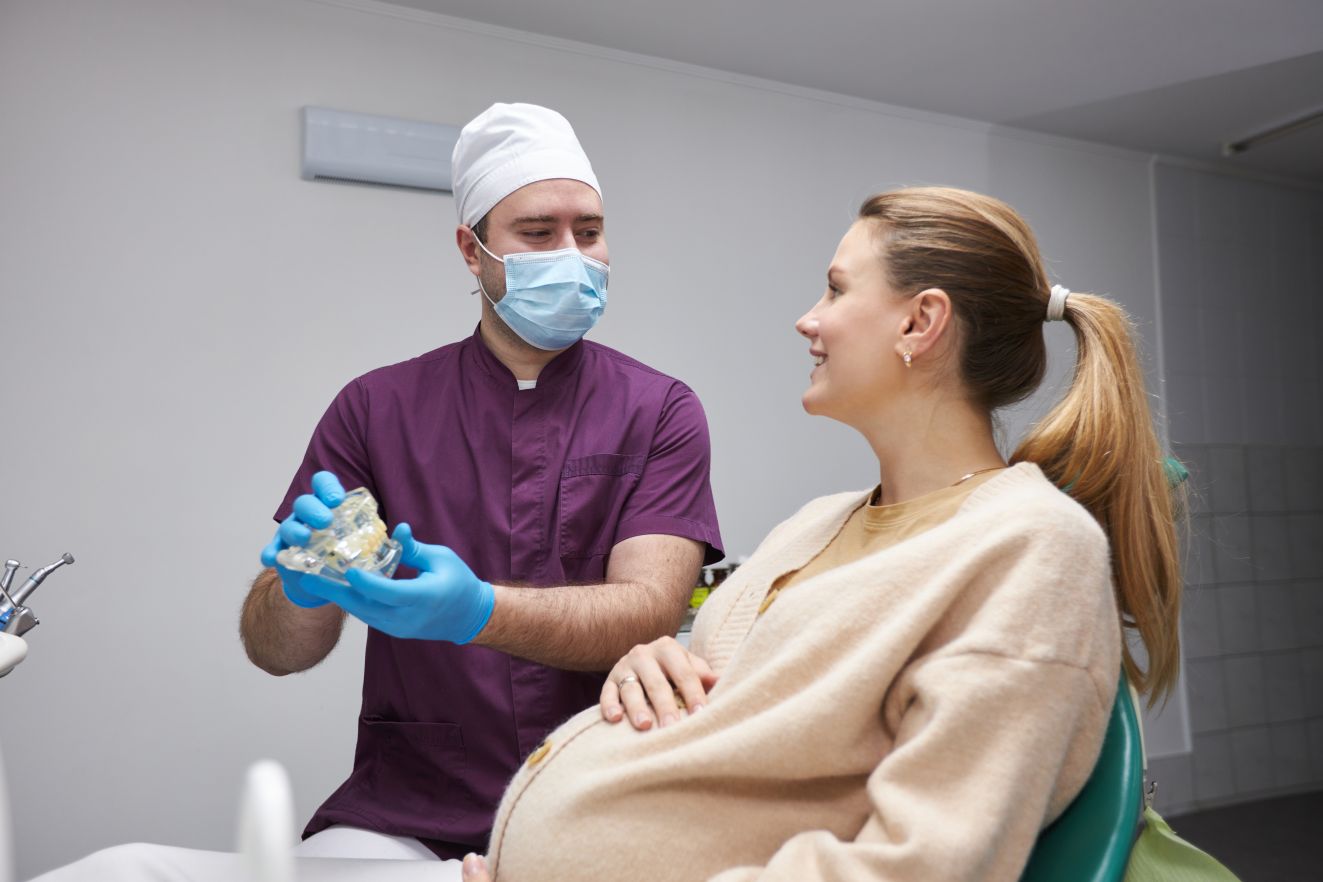
Gingivitis is the first stage of gum disease, and thankfully in most cases it’s completely reversible with improved brushing and flossing habits. But what happens if you get it while pregnant? Although your oral hygiene plays a part in it, gestational gum disease is often caused by fluctuating hormones, making it difficult to both prevent it and reverse it. Worse still, leaving it untreated can cause harm to your smile and may even affect your baby. Here’s a closer look at the dangers of gingivitis in pregnancy, and how you can protect yourself and your unborn child.
What is Gingivitis?
Gingivitis is the beginning stage of periodontal disease. Typically, it causes redness and inflammation in the gums and bleeding when brushing and flossing. While this may not seem all that dangerous, if left untreated it can get a lot worse, eventually turning into periodontitis, which could result in receding gums, persistent bad breath, and even permanent tooth loss.
Thankfully, in most cases gingivitis can be reversed by improving your oral hygiene routine, including brushing twice a day and flossing daily, visiting your dentist regularly, and avoiding dangerous oral habits like smoking and vaping.
What are the Risks of Having Gingivitis During Pregnancy?
Although gingivitis can often be stopped before it has a chance of getting worse, it can be a bit more challenging to do so during pregnancy. If you are expecting, hormonal fluctuations can be at least partly responsible for this infection, making it difficult to treat. Worse still, it can result in pregnancy complications such as low birth weight when not properly cared for during gestation. The good news, however, is that as long as you maintain a healthy oral hygiene routine while expecting, the condition should go away on its own after the pregnancy ends.
How Can I Reduce My Risk of Developing Gingivitis While Pregnant?
While it is not 100 percent preventable, there are still a few things you can do to lower your risk of developing gingivitis while pregnant. First, it is important to brush and floss regularly. This can be especially challenging if you’re experiencing morning sickness symptoms like nausea and vomiting but is still incredibly important. Other challenges include exhaustion, which could complicate your evening oral hygiene routine, and dehydration, which can increase the presence of dangerous oral bacteria.
If you are expecting, talk to your dentist about adding at least one extra checkup and cleaning during gestation. Although the American Dental Association recommends healthy patients visit the dentist every six months, it may help to increase the frequency of your appointments to keep a closer eye on your smile. This way, your gums won’t have a chance to get worse, and if they do, your dentist can treat them before you suffer any permanent damage.
Remember, while in most cases gingivitis can be prevented and even completely reversed, if you are pregnant, it can make doing both of those things much harder. Thus, be sure to keep a close eye on your oral health during gestation and let your dentist know if you notice any changes in your teeth and gums.
About Our Practice
Dr. Matt Mauck and Dr. Andrew Ricci understand the importance of having a healthy smile- and that includes your gums! If you are expecting and noticing changes in your oral health, don’t ignore them. Contact us today for a consultation to discuss gum disease and how you can protect your smile during pregnancy. To book your appointment at Mauck & Ricci, visit our website or call us at 303-745-1400.